

Search
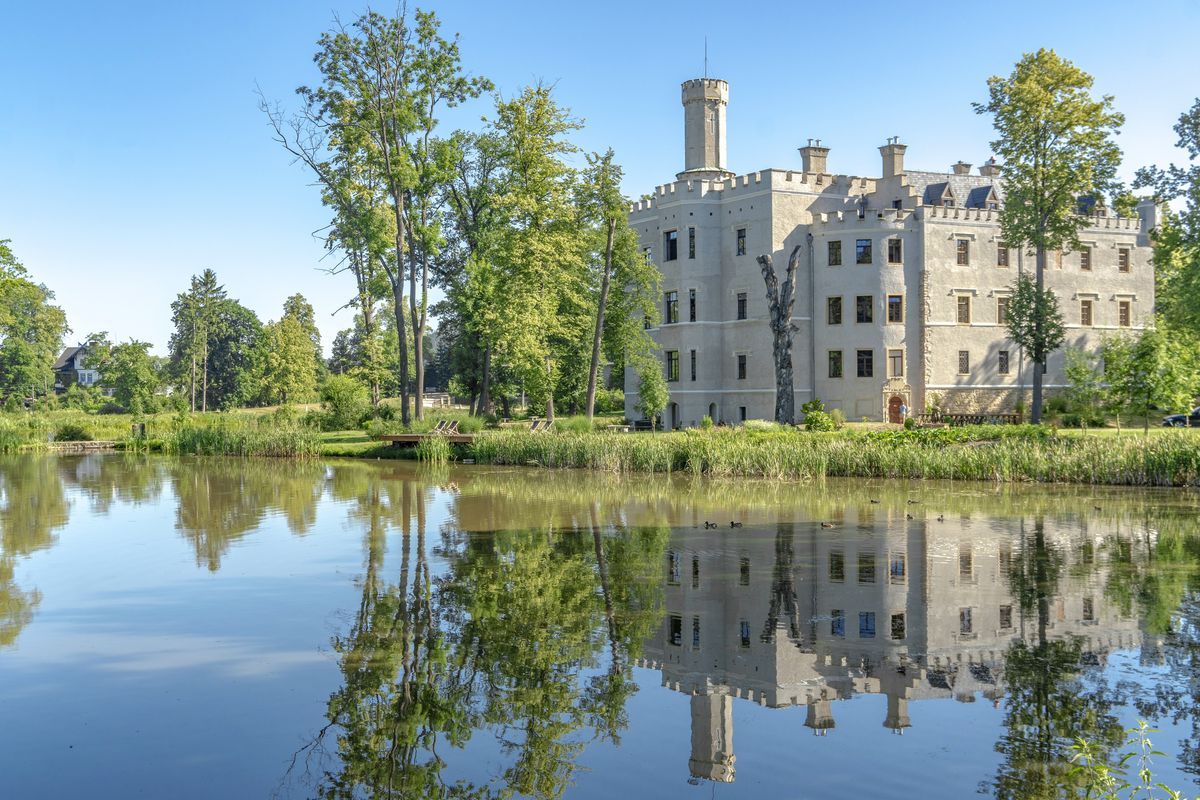
Zamek Karpniki, fot. Roman Szulc
Route "In the Shadow of the Rudawy Janowickie"
The Lower Silesian palace landscape, stretching across the Jelenia Góra Valley, captivates with its picturesque charm. It's no wonder architects of old chose this area as the location for their residences. Majestic structures, harmoniously integrated into the landscape, gave the area a fairytale-like character. Unfortunately, after World War II, most of them fell into ruin. Traces of their former glory were erased by years of neglect, when the communist authorities had their own vision for how these interiors should be used. However, the fate of many palaces changed, and some regained their former glory, once again enchanting in the shadow of the Karkonosze Mountains.
The tour begins in Wojanów nad Bóbrem. After crossing the bridge over the river and proceeding a few hundred meters, on the right side there is an exit to the parking lot at another of the restored palaces.
The route is 30 km long and requires at least 6 hours to complete.
Depending on how long it takes to reach the Rock Bridge, travel time may change.
Palace in Wojanow
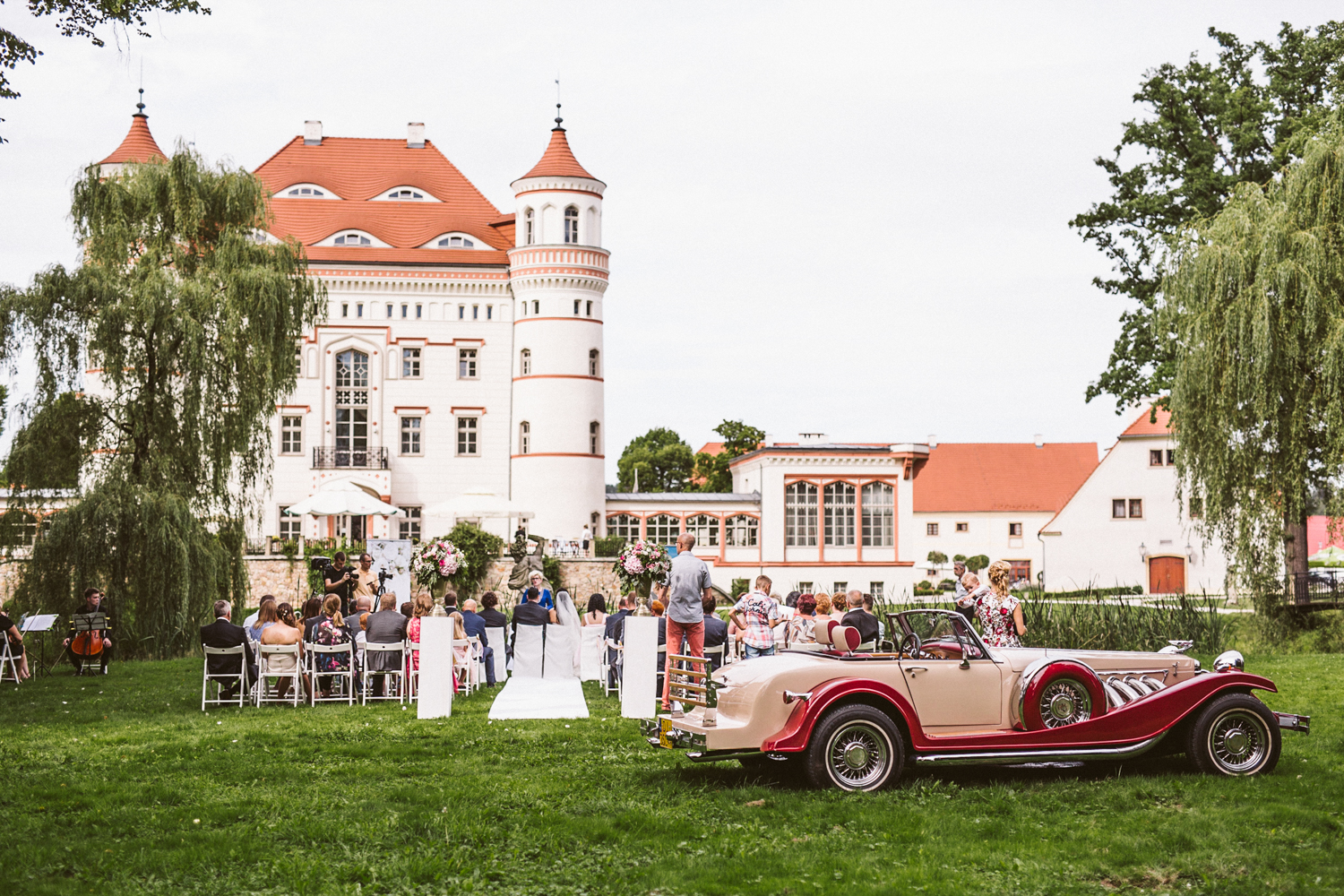
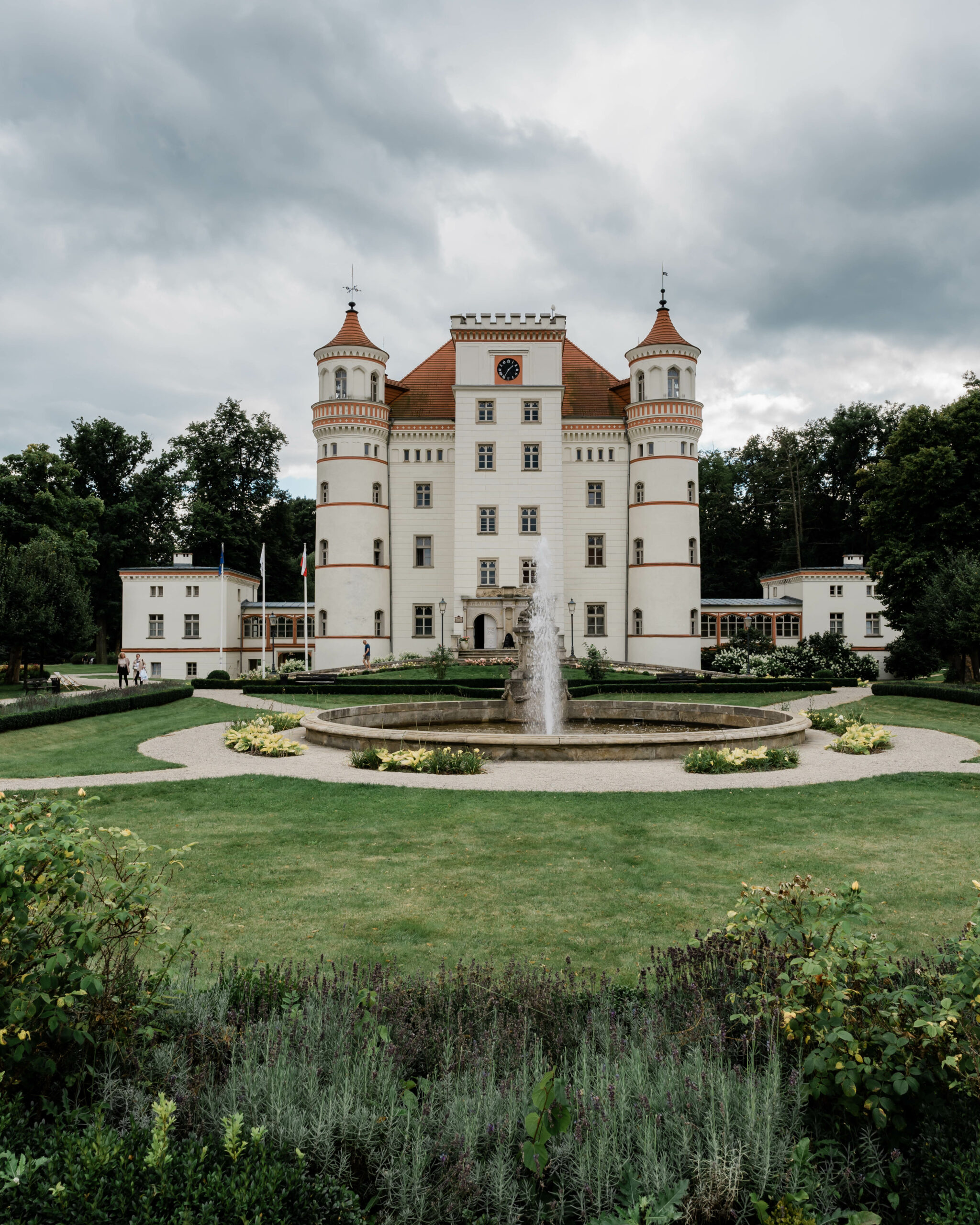

The first mention of the Wojanów estate dates back to the 13th century, when it was owned by knightly families, followed by Eberhard von Schildau and then Hans von Zedlitz. It later changed hands, first to the Schaffgotsch family, then to the Zedlitz family. The Swedes did not spare it during the Thirty Years' War. Baroque style was introduced to Wojanów by Daniel von Buchs, who commissioned the palace's reconstruction in the mid-18th century. In 1832–1833, Karl Albrecht Ike decided to give it a neo-Gothic style and established a landscape park around the estate. The palace is built on a plinth, which merges into a terrace on the south. It is roughly square in shape, with towers with tented roofs at its corners. After 1945, it shared the fate of most such buildings in Lower Silesia. It was decided that the State Agricultural Farm (PGR) and its employees would be a perfect fit for the palace's interiors. Naturally, this state of affairs led to its demise. Fortunately, in 1995, it fell into private hands, was restored, and today stands impressively. It houses a hotel and a restaurant. You can walk around the palace, passing the fountain in the courtyard and then crossing a bridge to the pond at the rear.
In the parking lot next to the palace, special spaces have been designated for vehicles of disabled people.
The paths around the palace are paved and also feature paved paths for easy access. The park area is unpaved and the terrain is uneven. The restaurant is located on the ground floor and is easily accessible by wheelchair.
Łomnica Palace
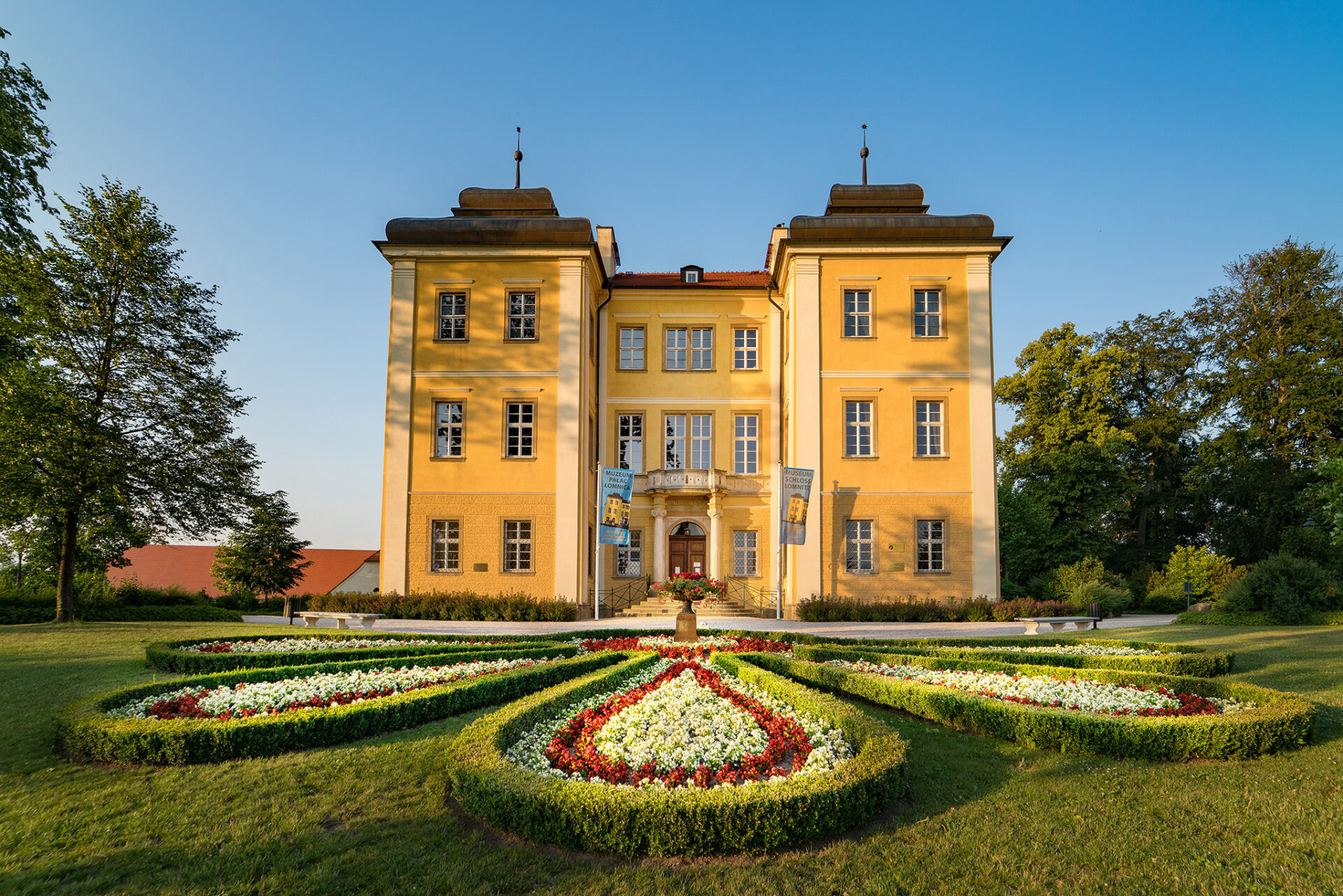
In the small village of Łomnica, you'll find a 17th-century Baroque palace and a historic residential building known as the Widow's House. Historical sources indicate that the Łomnica estate belonged to the von Zedlitz family at the turn of the 15th and 16th centuries. The first early Baroque manor house was built in the mid-17th century. The main body of the building and two corner alcoves remain. Subsequent renovations introduced numerous changes to the building's façade and interior, which followed contemporary fashion trends. In the first half of the 19th century, the windows were enlarged, another floor was added, and a representative staircase was added, significantly affecting the layout of the rooms. Currently, the building has three floors, covered by a hipped roof. Two corners are adorned with alcoves topped with flattened cupolas. A balcony portal stands above the entrance. After World War II, when the last owners, the von Küster family, abandoned the palace, it was taken over by the state treasury. Until the 1970s, it housed a school. The decaying building became private property in 1992 and was restored. It houses a museum dedicated to its history. The Widow's House, located adjacent, houses a hotel and restaurant. To the right of the palace, a path leads to the banks of the Bóbr River. A picturesque road lined with towering trees runs along the river. From Łomnica, the route leads towards the village of Karpniki, directly in front of the moated castle.
Access to the palace museum is limited by steep stairs, and the interior is inaccessible to wheelchair users. Surrounding the palace is a park with paved paths, and across the street is a restaurant, which, in addition to its garden, also has a wheelchair-accessible entrance.
Karpniki Castle
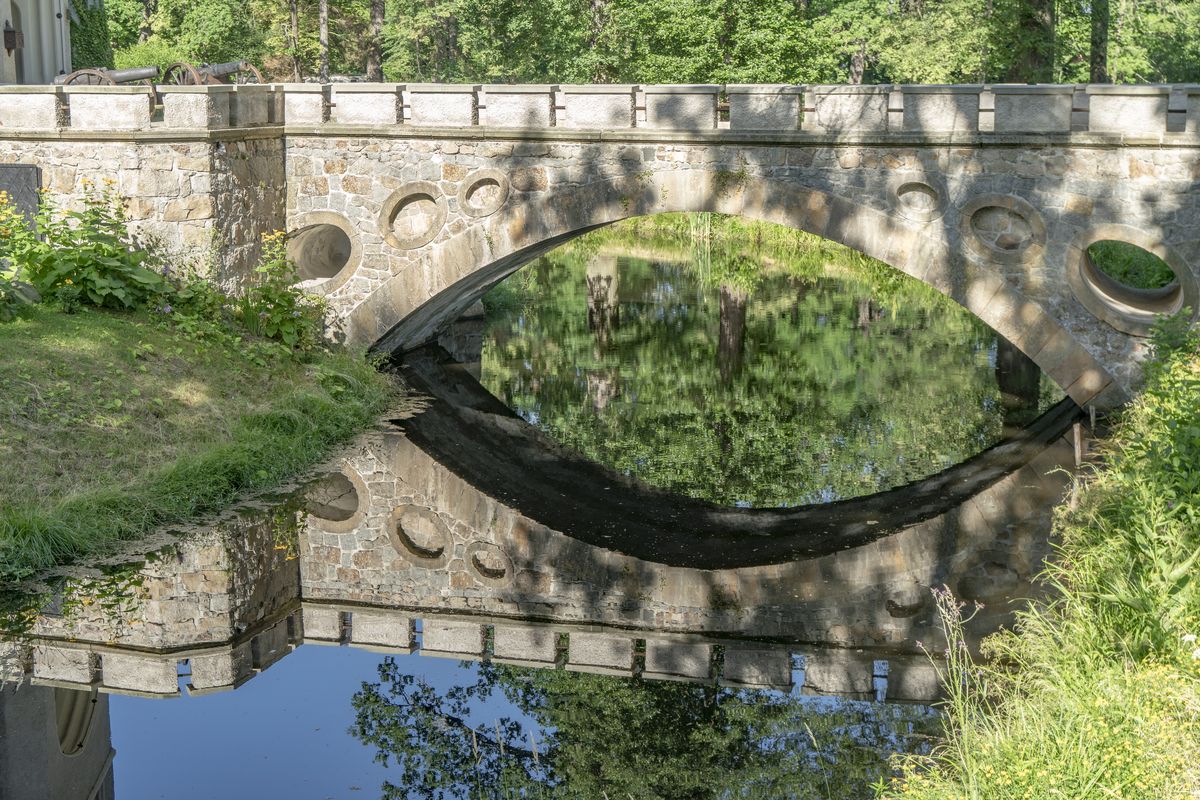
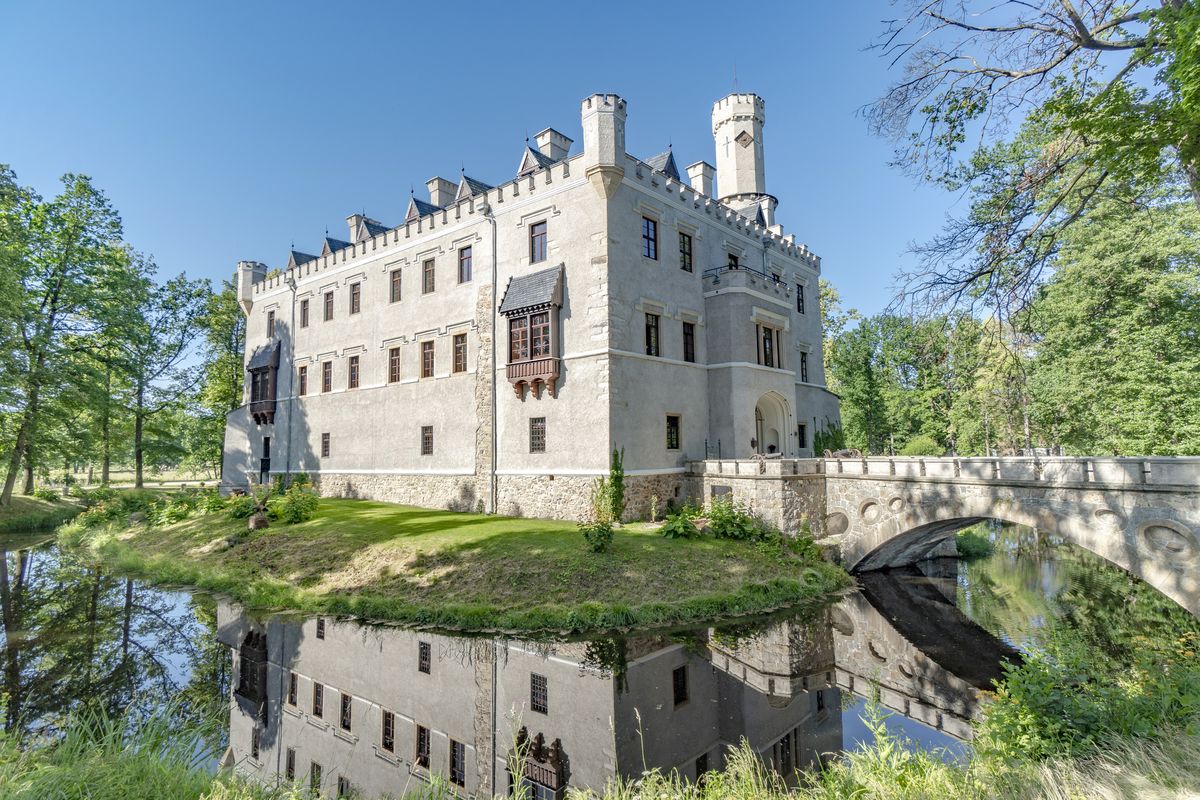
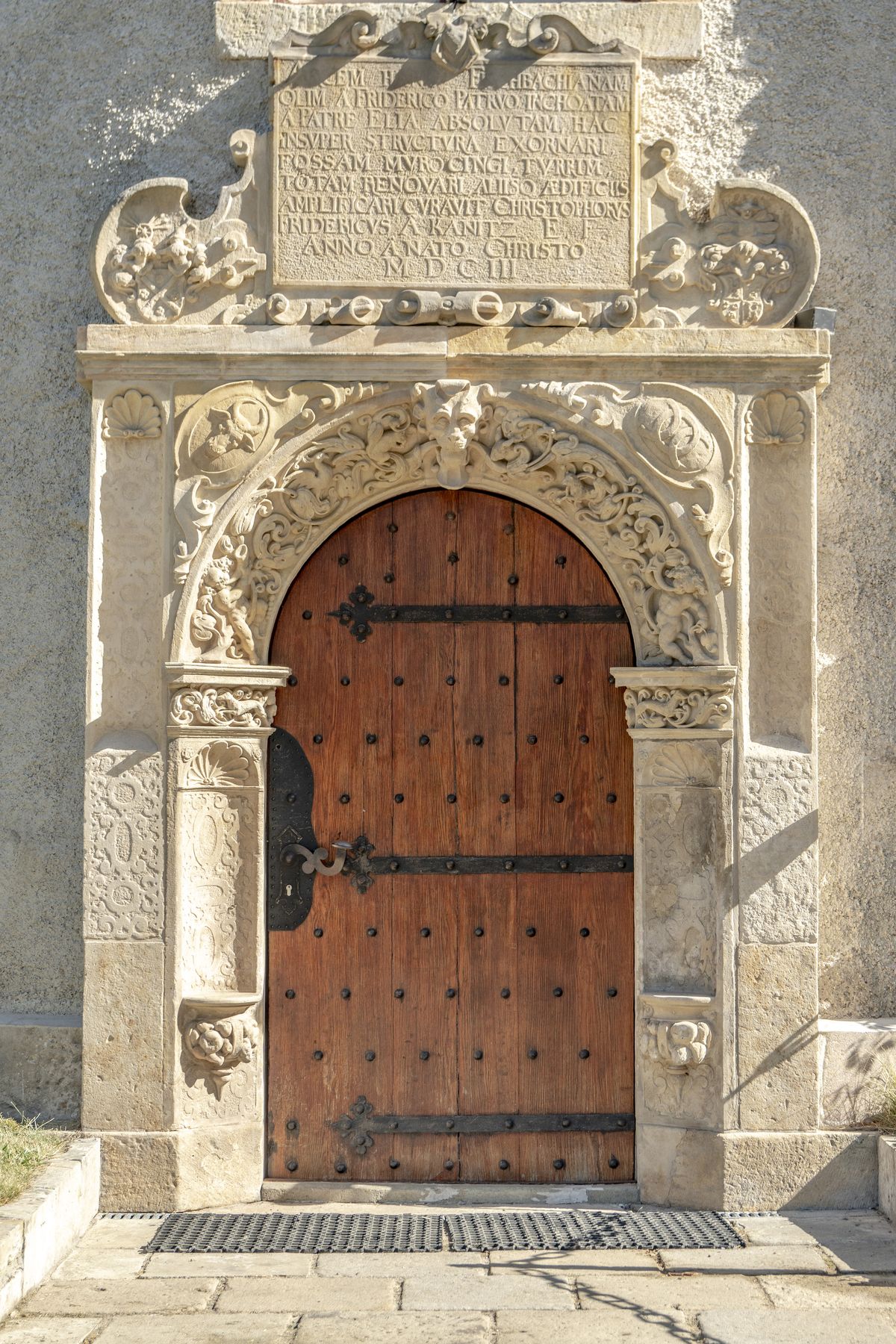
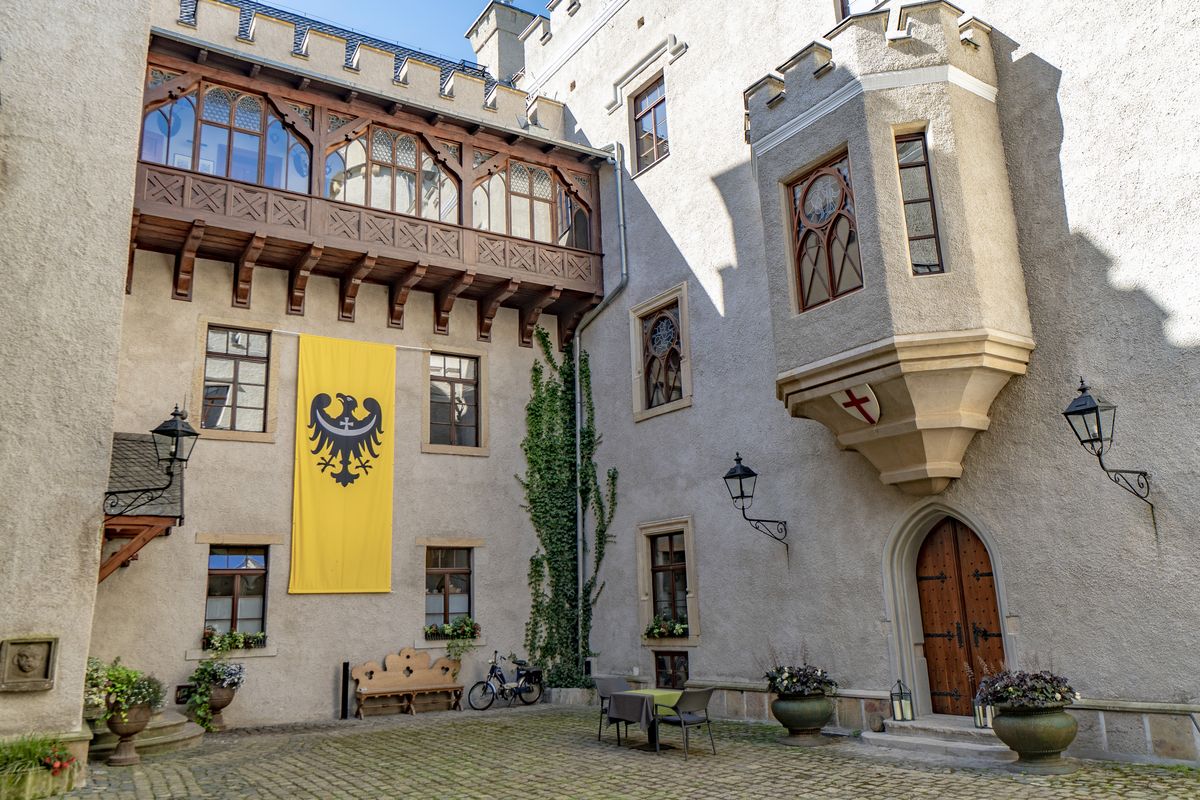
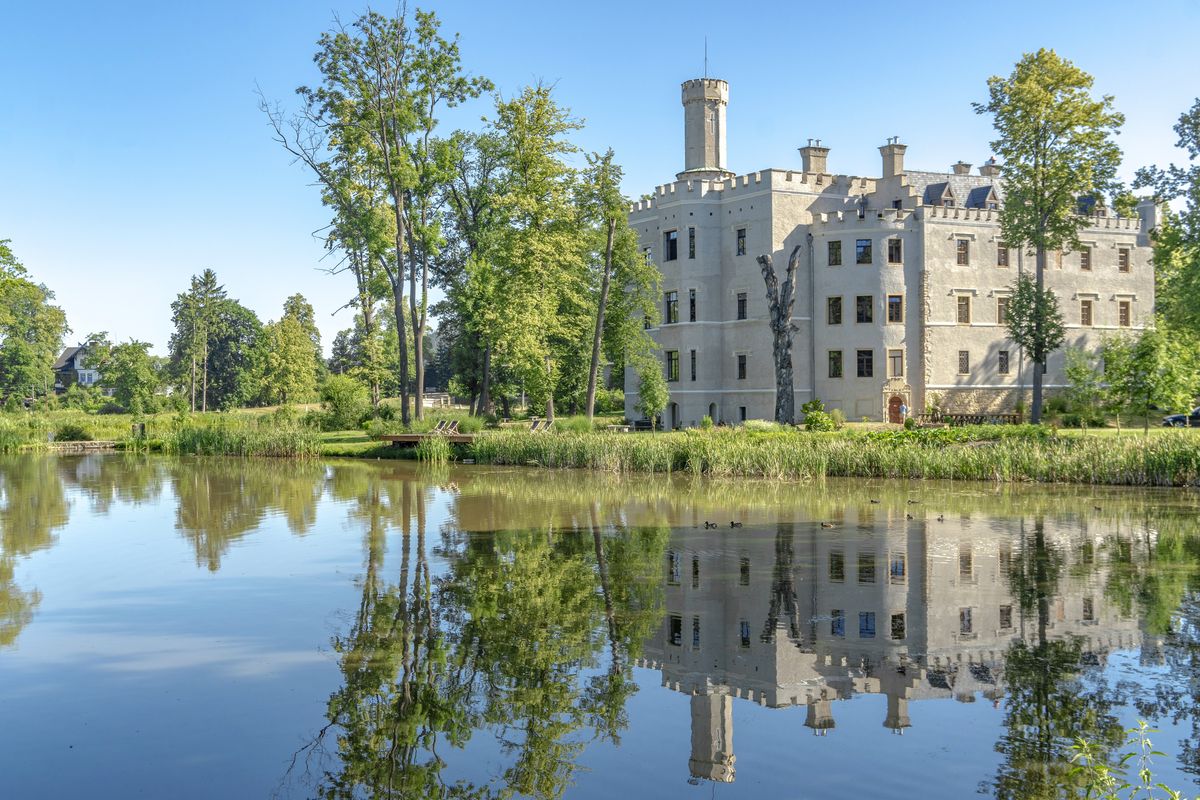
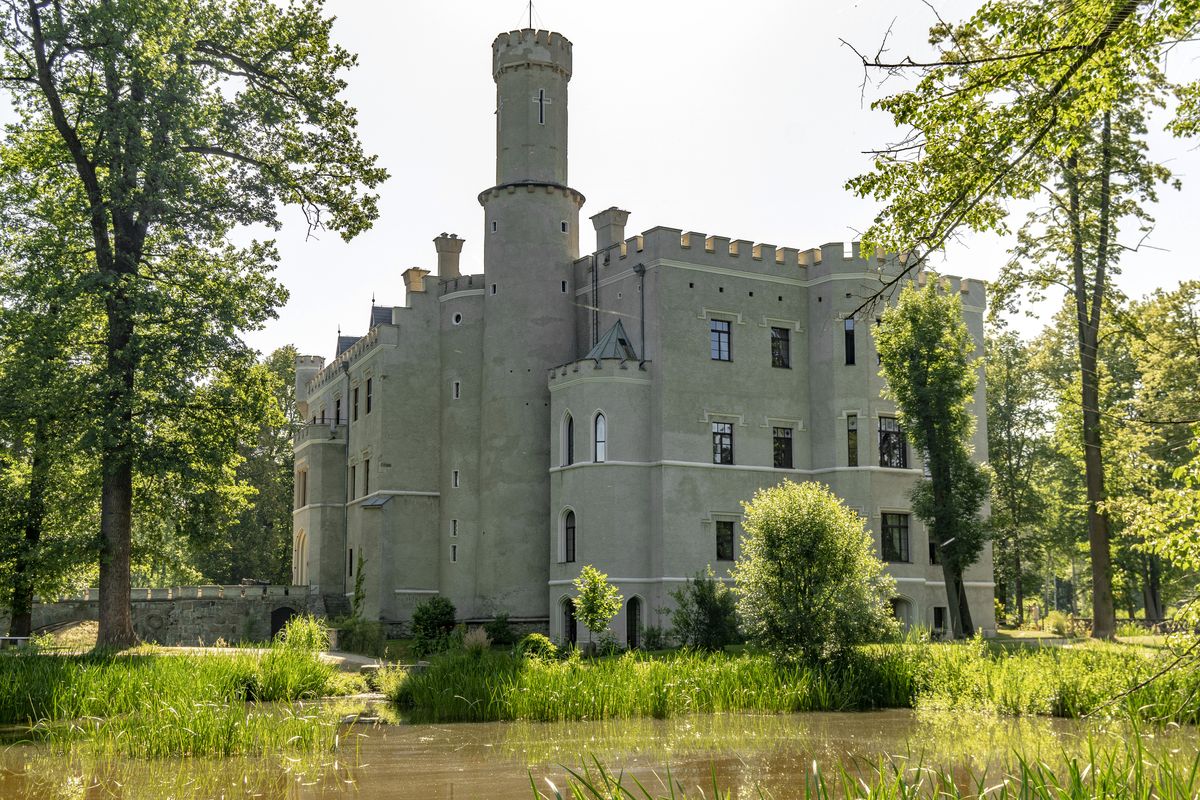
Legends say that the first fortress on this site was built by the Knights Templar in the 12th century. Other accounts claim that the knight who built the castle ordered the nearby ponds to be filled with carp. These were to be served during feasts held regularly at the castle. Their theft was punishable by harsh punishment. Unfortunately, a young man from the village was killed for illegal fishing. One night, he appeared in a dream to the castle's owner, announcing that he had come to take all the fish. The terrified knight awoke to see the fish leaping from the water and fleeing towards Gruszków. He ran to stop them, but they refused to obey. He slipped on one of them, fell, and hit his head on a rock. As a result, he died the next day.
Historical sources indicate that the Karpniki estate belonged to the distinguished Schaffgotsch and Zedlitz families over the centuries. The last reconstruction, designed to adapt the building to the needs of the Hohenzollern family, took place between 1822 and 1846. The design was created by the architect Karl Friedrich Schinkel. During World War II, Günter Grundmann organized a repository for antiquities at the castle. It also housed the famous painting by Hans Holbein (the Younger), "Madonna of Mayor Meyer." After the war, the painting found its way to Darmstadt, Germany, and is currently housed in the gallery of multimillionaire Reinhold Würth in Künzelsau, Baden-Württemberg, which is open to the public. After World War II, the castle shared the fate of similar sites in former German territories. The turning point came in 2014, when the historic building was restored to its former glory. The interiors are captivating because they are meticulously maintained.
They showcase what has stood the test of time. Here, you can see remnants of frescoes, 16th-century vaults, and original 19th-century fireplaces, wood paneling, and floors. The castle houses a hotel and restaurant, so the monument is open exclusively to guests. The picturesque, winding road leads into the heart of the Rudawy Janowickie Mountains. You'll need to cross the Karpnicka Pass and descend into the Bóbr Valley. At the beginning of Janowice Wielkie, turn right onto Robotnicza Street and follow it to the parking lot before the barrier on the trail leading to Bolczów Castle. Paradoxically, the access road to the parking lot is in much worse condition than the section of asphalt beyond the barrier, so don't be discouraged by the potholes.
The facility is open to hotel guests and restaurant patrons. Due to its historic location,
Due to the nature of the site, it is not accessible to people with mobility impairments (narrow passages, thresholds, uneven surfaces). This doesn't change the fact that the castle looks beautiful from the outside, and you can easily drive around it on the path leading along the moat.
Rock Bridge
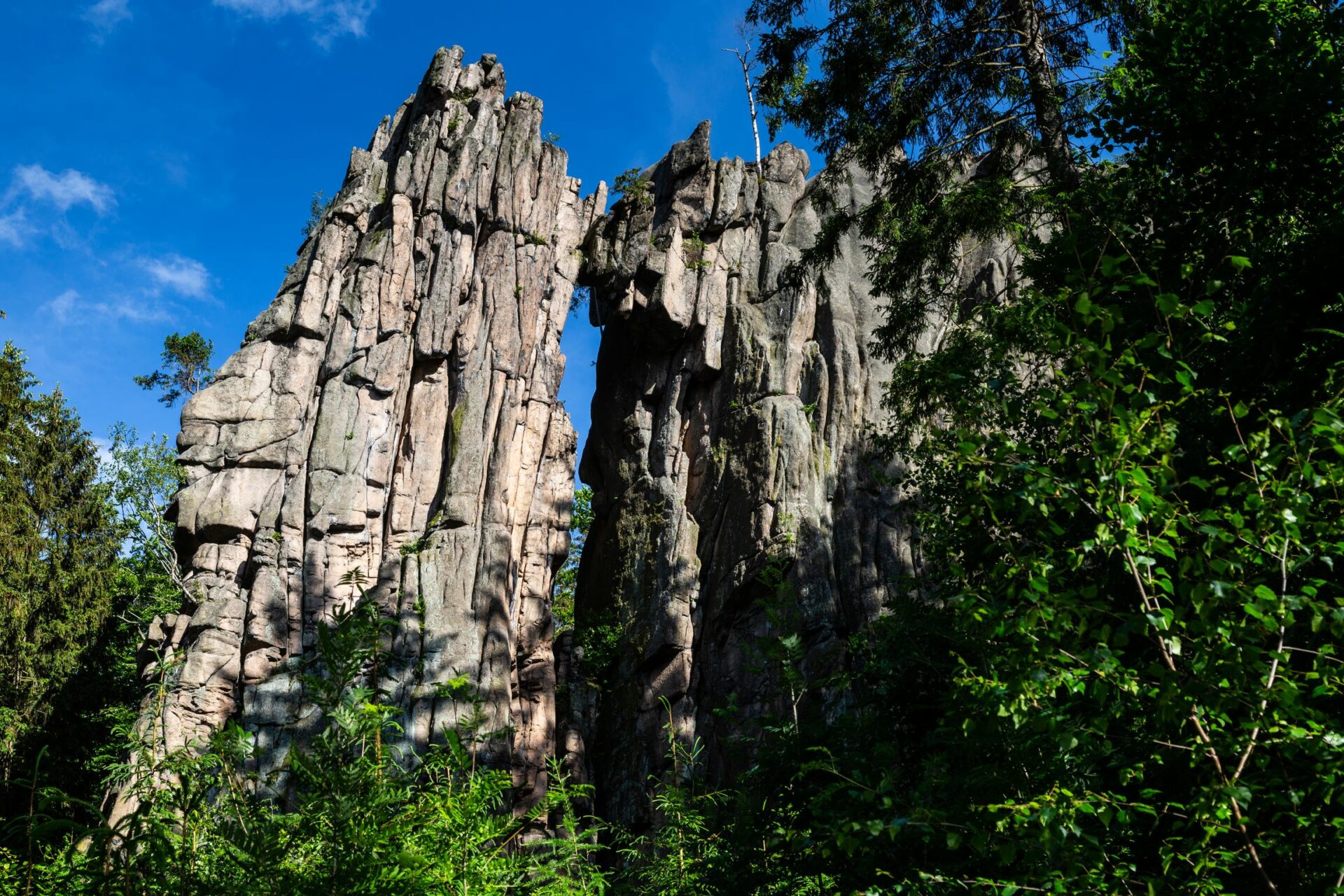
Located in the heart of the mountains, Skalny Most (Rocky Bridge) is one of the few attractions in the Polish part of the Sudetes accessible to all hikers. The hike begins at the parking lot in Janowice Wielkie and continues along the yellow mountain trail, which stretches over 2 km along a paved road, with only a few uneven surfaces. Wheelchair users can easily navigate this route. It climbs gently throughout, and in some places, the terrain becomes flat enough for a rest. The trail is surrounded by a lush forest, from which imaginative rock formations emerge periodically, including Krowiarki and Ścianki. The murmur of the Janówka stream flowing nearby accompanies the hike. At the culmination point, turn from the yellow trail onto the blue trail, onto fire access road no. 14, and after a while you'll reach Skalny Most (Rocky Bridge) with its famous "Piece" (a place difficult for people with mobility impairments). The rocky outcrop is approximately 25 meters long and reaches a height of up to 20 meters. A small rock bridge connects the outermost crag with the rest of the formation, giving the area its name. This natural phenomenon was created through erosion, where softer rocks crumbled, creating a natural window and bridge at the top. We follow the main road to the final point on the trail, Miedzianka. This interesting village, literally and figuratively, has sunk into the ground. The entire story of its slow disappearance was described by Filip Springer in his book "Miedzianka: The Story of a Disappearance." Currently, driven by the growing interest in this topic, numerous visualizations have emerged that seem almost unbelievable. Of the town, which was bustling with life just a hundred years ago, almost nothing remains today. To cultivate the village's ancient traditions, beer brewing has returned here. For hikers who struggle to get to the Skalny Most, a visit to the Miedzianka Brewery restaurant will be a perfect way to end the trail. Not only is there a great descent, but also, from the restaurant terrace, you can admire the panorama of the Sokole Mountains, the most famous part of the Rudawy Janowickie region. It's hard to recommend a walk around Miedzianka itself, as virtually nothing remains. A few buildings, including an Evangelical church, which miraculously survived to this day, can be seen from the main road.